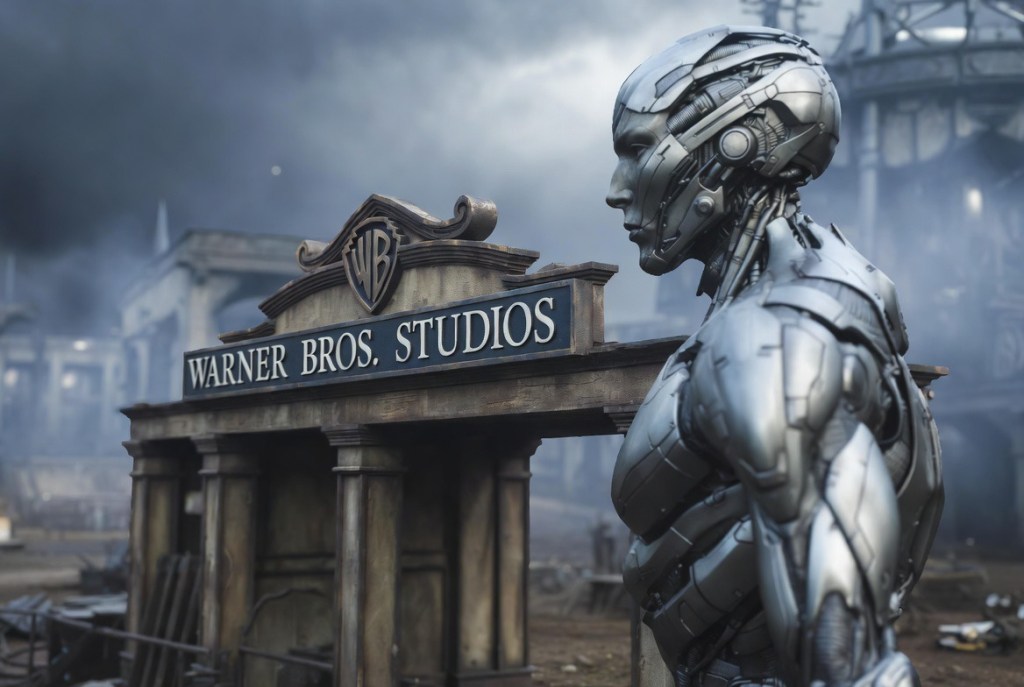
Warner Bros. was founded on April 4, 1923, but the brothers had already been forging their cinematic path a decade earlier, back when film still felt like a rebellious experiment rather than a content pipeline. To me, WB stands as one of the last true pillars of classic Hollywood that still feels rooted in its original soul. Not just a logo or a backlot, but a living archive of cinema’s imagination. Its prop department alone is legendary. Filmmakers from all corners of the globe still pilgrimage there, like it’s a sacred library of visual history.
But in today’s corporate reality, legacy isn’t a guarantee of protection. Over the last few decade, we’ve watched historic studios get absorbed into larger conglomerates whose fluency often leans more toward earnings calls than artistic stewardship. Universal under Comcast (CMCSA). Paramount Pictures under Skydance / Paramount Global (PSKY). MGM under Amazon (AMZN).
Every acquisition checked the right business boxes while quietly chipping away at the creative independence that once defined Hollywood’s golden age. Profit replaced poetry. “Content” replaced cinema.
Now, with Warner Bros. Discovery rumored to be the next studio in play, the question isn’t just who could buy it, it’s who should. The potential buyers reportedly include Paramount/Skydance, Comcast, and Netflix (NFLX). Three very different entities, three very different reputational trajectories.
From a strictly financial standpoint, all three could integrate the asset. But from a brand-equity, cultural-preservation, and industry-health standpoint? The stakes are far higher than the sale price.
This is where the long game matters. A studio like Warner Bros. carries more than IP libraries. It carries cultural weight, intergenerational trust, and a century-long relationship with global audiences. Mishandled, the reputational cost to both the buyer and the industry is enormous. Whoever takes ownership isn’t just acquiring a business line, they’re inheriting a mythology that must be protected.
Among the three suitors, Netflix stands out to me, not as the perfect option, but as the least risky for the future of the art. Yes, it’s a digital-era company. Yes, it lives inside the streaming ecosystem. But Netflix has consistently demonstrated a willingness to fund cinema that isn’t driven uniquely by franchise logic. They’ve cultivated filmmakers, backed idiosyncratic projects, and shown a pattern of respecting the creative process rather than rebranding it for synergy.
From a business perspective, that signals alignment with long-term cultural value, not just immediate returns. If a sale is truly unavoidable, the decision shouldn’t hinge on the highest bid. It should hinge on who is promising to protect the brand, champion the creators, and support a healthy balance between artistic integrity and business evolution.
Warner Bros. doesn’t need another conglomerate folding it into a brand portfolio. It needs a steward, one with the courage, taste, and strategic clarity to preserve its identity while guiding it into the next century.
Because the future of cinema depends on more than mergers. It depends on who still believes the art is worth protecting.
